
The lockdown that crippled the entire logistics, delivery and supply chain network to near zero, was enough to deal a body blow to India's fastest growing unicorn whose very business model saw a severe disruption, like several other firms and sectors.

Bhattacharya is now more optimistic than before regarding the adoption of newer technologies, even though she acknowledges there could be short-term challenges owing to the pandemic. Salesforce is among the first global employers to take the 'no lay-off' pledge, pertaining to COVID-19.

'Now, because of COVID-19, we have become the only way to learn.'

'When a person is capable of infecting 50 others, will you think about the privacy of the person or about protecting the lives of people?'

What is aggravating the situation is that e-commerce firms are facing huge shortage of delivery personnel. They have not been able to bring back their staff to work, despite offering higher pay and Covid-related insurance packages.

However, many of these firms were facing an uphill task of convincing the people on the ground to return to work, as many are apprehensive of their safety.

Its entry will increase competition especially when WhatsApp too has received approvals to launch payment service.

'If the RBI blesses us with a banking licence, we would like to launch a successful bank.'

Lightning Logistics, Shreyas Shibulal's start-up, rents out electric scooters along with the riders for last mile delivery.

Byju's has emerged as the leader in the Indian education-tech sector. They are pioneering technology shaping the future of learning for millions of school students in India.

The two parties did not share the deal size but said MavenHive's two founders and 40-odd team members have joined the Bansal-owned firm. MavenHive was started by Bhavin Javia and Anandha Krishnan in 2012.

With the attrition rate continuing well above 20 per cent, one of the highest in the segment, Infosys is on a drive to reimagine the way it engages with employees starting from the time of recruitment itself. The company is using digital technologies in order to simplify recruitment, provide faster career track to employees, and incentivise people with top skills. The company is looking at doubling the number of recruits from tier-I engineering colleges such as IITs and NITs to enrich its talent base. These candidates who are offered twice the salary as compared to regular campus recruits, join as 'power programmers', a term that has been internally coined by the company to recognise the top coders.
This September, Sachin Bansal picked 94 per cent stake in microfinance company Chaitanya Rural Intermediation Development Services. His immediate plan is to scale up the company's operations as quickly as possible without making much investment in physical infrastructure and by leveraging technology.

The proposals are mostly based on a report submitted by Justice B N Srikrishna in July 2018. The draft Bill has since gone through at least two updates based on inputs received from industry, report Yuvraj Malik and Peerzada Abrar.

'In India, the impact will be less than 1% of employee headcount.'
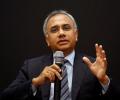
The latest whistleblower complaint accusing him of pressuring finance team members to inflate profitability has come right out of the blue. There's another allegation that he made racist remarks against some board colleagues. For a man with a singular focus on the business and clients, all of this must have blindsided him.

After posting double-digit growth for the fourth consecutive quarter, chief executive officer and managing director Salil Parekh tells Yuvraj Malik and Debasis Mohapatra that the firm is not facing any delay in ramping up of large deals.

Even at early stage, start-ups are raising more money faster owing to the rise of a lot of specialised early-stage VCs and emergence of seed-stage programmes.
Bansal has picked up a majority stake in Chaitanya Rural Intermediation Development Services, a company which runs microfinance institution Chaitanya India Fin Credit.

While the Saudi drone strike has put the focus back on anti-drone measures, caution also stems from the fact that India has a number of large oil refining assets close to India-Pakistan border.
 © 2025 Rediff.com - Investor Information - Advertise with us - Disclaimer - Privacy Policy - Sitemap - Feedback - About us - Terms of use - Grievances